SoEasy 2248:Number Puzzle 2048
SOFISH GAMESCasual
4.936.00 Reviews
- Version
- 1.0.9
- Installs
- 100.00K
- Age Rating
- Everyone
Screenshots
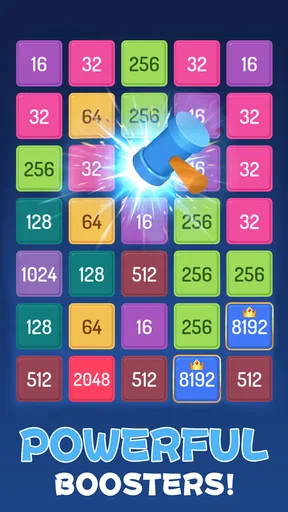
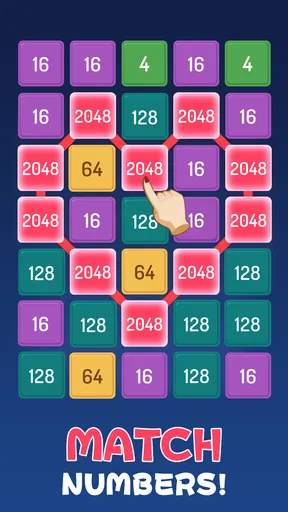
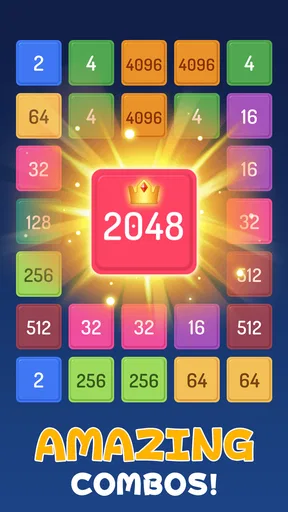
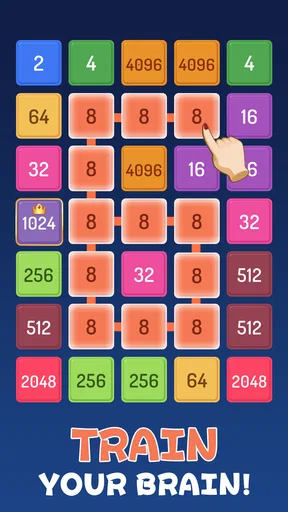
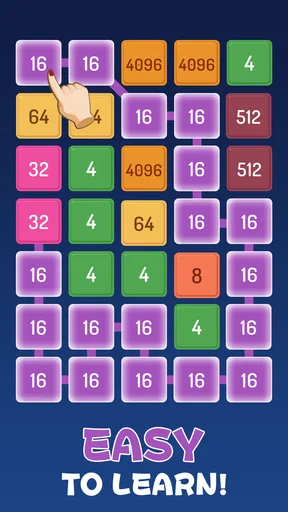
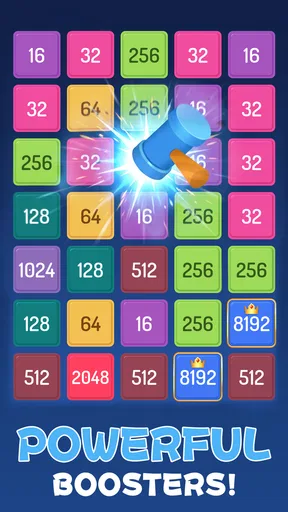
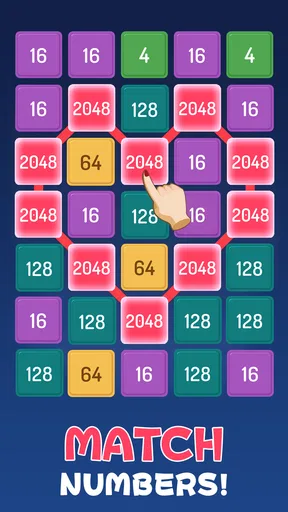
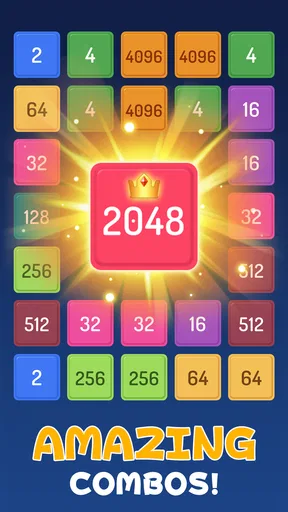
Our Review of SoEasy 2248:Number Puzzle 2048
 Analysis by Appyee
I usually approach number puzzles expecting a familiar routine: place tiles, combine matching values, and repeat until the board becomes difficult to control. SoEasy 2248 starts from that recognizable idea, but its appeal is less about spectacle and more about the calm, focused mood created by short rounds and clear visual goals. As a free casual game from SOFISH GAMES, it is easy to pick up when I have only a few minutes, yet it still gives me enough room to think about each move rather than tapping randomly.
The basic invitation is simple: merge numbers, work toward target scores, and finish levels. That simplicity is important because the game does not ask me to learn a large fictional world, manage a character, or understand a complicated menu system before playing. I can open it and immediately concentrate on the board. Its Everyone age rating also fits that approachable design, making it suitable for players who want a gentle puzzle rather than an intense action game.
My first impression is that this is best understood as a compact thinking game with a relaxed surface. The store summary describes reaching target scores and clearing levels, and that focus comes through in the way the experience is organized around individual goals. I am not playing for a long story or a dramatic ending; I am playing to make the next useful merge, protect space, and complete the current challenge without losing control of the board.
A clear visual language for small decisions
The art direction works because number puzzles depend on instant readability. Every tile has to communicate its value quickly, and the board has to remain understandable even when several pieces are close together. In my experience, the most successful moments come from this direct visual relationship: I see a possible combination, judge the empty spaces around it, and decide whether taking it now will help the target or create a problem later.
That clarity gives the game a coherent visual mood. Instead of distracting me with unnecessary decoration, the presentation supports the central act of arranging values. A casual puzzle can become tiring when its screen is crowded with competing information, but this style of play benefits from restraint. The numbers are not just labels; they are the language of the game, and the board is effectively a small planning map.
There is also a useful psychological difference between a target-based level and an endless attempt. When I know that the immediate purpose is to reach a particular score and clear the stage, each merge feels connected to a short-term plan. I am not simply trying to survive forever. I am asking whether a move improves my position enough to bring the level closer to completion.
One practical tip is to read the board in terms of future space, not only current matches. The obvious merge is often attractive because it produces an immediate result, but preserving room for the next pieces can matter more. I found that treating empty positions as resources makes the puzzle feel more deliberate. This is a small change in habit, but it turns the game from a sequence of quick reactions into a manageable visual exercise.
The setting is intentionally abstract. There is no need to remember characters, locations, or plot details between sessions. That makes the game particularly comfortable for interrupted play. If I put it down while waiting for a bus or during a short break, I can return without reconstructing a story. The board itself is the setting, and its changing arrangement supplies the tension.
Why the presentation suits short sessions
The game’s visual language also helps with pacing. A level gives me a defined piece of progress, so a session can feel complete even when it lasts only a little while. This is different from a large puzzle campaign that expects a long uninterrupted commitment. Here, the satisfaction comes from solving a contained problem and then deciding whether to continue with another.
That structure is useful in everyday situations. I can imagine opening it while waiting for food, taking a few turns during a quiet break, or using it as a low-pressure way to reset after work. It does not demand the emotional investment of a competitive multiplayer game, and it does not punish me for failing to remember a complex control scheme after a day away.
At the same time, the clean presentation means that players looking for a rich fantasy setting may find the experience too plain. The numbers and goals are the content. If I want expressive characters, elaborate environments, or a strong narrative reason to keep playing, this is not the right kind of casual game. Its atmosphere comes from concentration and order rather than from world-building.
Sound, rhythm, and the feeling of a move
Number puzzles live or die by rhythm. Each move creates a small pause for evaluation, followed by a moment of action and then a result. SoEasy 2248 fits naturally into that pattern because the gameplay does not require constant speed. I can slow down when the board becomes crowded, inspect possible combinations, and continue when I have a clearer plan.
That measured rhythm is one of the strongest parts of the experience. It gives the game a calm, almost meditative quality without removing the pressure of limited space. A good move feels satisfying because it resolves one problem while opening another. A poor move is not usually dramatic; it simply leaves the board less flexible, which encourages me to think more carefully next time.
The sound design is most effective when it reinforces this sequence rather than competing with it. In a puzzle built around merges and level completion, audio should make actions feel connected: a placement, a combination, and a successful goal should read as parts of one clean interaction. I prefer that kind of restrained feedback to loud effects that make every tap feel like an event.
There is a trade-off here. A quiet, focused rhythm is excellent for people who want a background-friendly game, but it may feel understated to players who need constant audiovisual excitement. This is not a game I would choose for an energetic burst of action. Its mood is closer to organizing a small desk: the pleasure comes from making the arrangement work.
My advice is to treat each round as a sequence of decisions rather than a race. Before combining a pair, I look at what the resulting tile might block and which spaces will remain usable. This habit makes the pacing feel intentional. It also prevents a common mistake in number puzzles: making several attractive merges quickly and then discovering that the board has lost the flexibility needed to reach the target.
When the rhythm works best
The pacing is especially well suited to players who enjoy repeatable concentration. I can play for a short period, stop, and return later without feeling that I have missed a timed event. That makes it more forgiving than many fast casual games. There is no need to keep up with other players in the same moment, and the main challenge remains the arrangement in front of me.
However, anyone who dislikes repetition should think carefully before installing it. The core loop is intentionally narrow: merge numbers, pursue the level objective, and solve the next board. The satisfaction depends on enjoying small improvements in planning. If that loop already sounds monotonous, a more varied puzzle game with changing rules may provide better long-term interest.
How the mechanics fit the casual format
The mechanical foundation is easy to understand, but easy rules do not mean every move is automatic. The important decision is not simply whether two values can be combined. It is whether the combination helps the current target while preserving enough room to continue. That balance gives the game more depth than its short description suggests.
I like the way target-based progress gives direction to a familiar merging formula. A score goal turns the board into a problem with a purpose. Instead of chasing the largest number for its own sake, I can ask how close I am to clearing the level and whether a safer sequence will get me there. This makes the game approachable for beginners while still rewarding players who think several moves ahead.
One non-obvious strength is that the game can function as a quick planning exercise. I do not need a long session to practice spatial awareness and consequence-based thinking. Even a short attempt asks me to compare immediate gain with future flexibility. That makes it useful for a break when I want something more engaging than passive scrolling but less demanding than a strategy game with many systems.
Another useful approach is to separate “progress moves” from “maintenance moves.” A progress move directly improves the score or creates a valuable combination. A maintenance move protects open space or keeps the board organized for later. Not every turn needs to produce the biggest visible result. Sometimes the smartest choice is the one that looks modest but prevents a dead end.
This is also where the game may frustrate impatient players. The interface can feel simple enough to encourage fast tapping, yet the board rewards restraint. If I rush because a merge is available, I may spend space that would have been more valuable a few turns later. The friction is not complicated controls; it is the mismatch between quick input and slower decision-making.
The game is free, which lowers the barrier to trying it. It is also listed for an Everyone audience, so its general tone is accessible rather than mature or confrontational. For a family member who wants a straightforward puzzle without a steep learning curve, that combination is appealing. I would still recommend explaining the basic objective to a younger player, because the challenge comes from planning rather than from simply matching anything that looks alike.
Who will get the most from it
I would recommend it to people who enjoy the familiar appeal of 2048-style number merging but prefer progress to be divided into clear level goals. It suits commuters, casual puzzle fans, and anyone who likes games that can be played in small pieces. It is also a reasonable choice for someone returning to mobile games after a break, since the central idea is understandable almost immediately.
I would skip it if my priority were deep customization, social competition, story, or constant novelty. The game’s value is concentrated in its board decisions and steady progression. A player who wants a large collection of unrelated mini-games will probably find the experience too focused. Likewise, someone searching for a high-pressure challenge may prefer a puzzle with timers, leaderboards, or more aggressive failure conditions.
Compared with a completely endless number puzzle, the level structure gives me more frequent stopping points and clearer short-term motivation. Compared with match-three games, it feels less dependent on quick visual scanning and more dependent on arranging future possibilities. Compared with elaborate strategy titles, it removes resource systems and long-term management, leaving one central question: how can I combine values without losing control of the available space?
That narrower design is both its identity and its limitation. It means the game can be picked up quickly and understood without preparation. It also means the experience cannot hide a lack of variety behind a large feature list. Whether it remains enjoyable depends almost entirely on how much I like refining my decisions within the same basic framework.
Practical details before downloading
SoEasy 2248 is available as a free game, and its current version is 1.0.9. The listed minimum operating system is Android 7.0, so owners of older devices should check compatibility before expecting to play. The game has passed the early discovery stage with over 100 thousand installs, while its average rating is 4.9 from around 2.8 thousand ratings. Those figures suggest that its straightforward puzzle format has found a receptive audience, though they do not change the central question of whether number merging is personally enjoyable.
The release date is June 11, 2026, which places it among newer entries for players discovering it now. SOFISH GAMES has kept the concept focused rather than presenting it as a broad entertainment package. I see that as a benefit for people who know exactly what they want: a small, goal-driven number puzzle that can fit around the rest of the day.
One question many players have is whether they need to understand the whole game before starting. They do not. The basic interaction is approachable, and the meaningful learning happens through the board itself. I would begin by making safe combinations, then pay attention to how the resulting layout affects the next few moves. The game becomes more interesting once I stop judging a move only by the number it creates.
Another practical question is whether it works for short or longer sessions. It handles short sessions especially well because level completion provides a natural pause. Longer play is possible, but repetition becomes more noticeable over time. I would use it as a compact daily puzzle rather than expecting it to replace a more varied main game.
Players may also wonder whether it is suitable for children or shared family use. The Everyone rating and simple number-based premise make it approachable, and there is no need for advanced reading or knowledge of a fictional universe. Still, the best fit depends on patience. A child who enjoys arranging and planning may find it satisfying, while one who expects instant rewards may lose interest when a careful setup is required.
Finally, I would consider the type of attention I want to give it. This is not ideal when I am distracted by several conversations, because one careless move can disrupt the board. It is better for a quiet pause in which I can look at the available spaces and make a deliberate choice. That small requirement is part of the charm, but it is also the main reason I would not recommend it to someone seeking a purely automatic time-killer.
The atmosphere it leaves behind
What holds the experience together is the agreement between its mechanics and its mood. The visual language keeps the numbers readable, the sound and feedback support the act of merging, and the level-based rhythm gives each session a modest sense of purpose. Nothing needs to be louder or more complicated for the game to work. Its atmosphere comes from turning a crowded board into an orderly one.
I especially appreciate that the game rewards a calm mindset. When I play well, I am not reacting to a dramatic event; I am noticing relationships between tiles, protecting space, and choosing when to make progress. That creates a quietly satisfying loop. The board begins as a problem, and each thoughtful move makes it a little more manageable.
There are clear boundaries to that appeal. The presentation is not built for players who need a strong narrative setting, a changing cast of characters, or a constant stream of new mechanics. The repeated number-merging structure can become familiar quickly, and the relaxed pacing may feel too subdued for anyone seeking urgency. Those are not flaws to hide; they define who should install it.
For me, the best use case is a short break when I want to engage my mind without committing to a complicated game. I can open a level, plan a few combinations, and stop after a satisfying result. The strongest tip I can offer is to value open space as much as score. Once I play with that principle, the game feels less like random tile matching and more like a series of small, readable decisions.
My final recommendation is simple: choose SoEasy 2248 if you want a focused, free casual puzzle with a clear visual identity and an unhurried rhythm. It is a good companion for quiet moments and a friendly introduction to target-based number merging. I would look elsewhere for story, social competition, or major mechanical variety, but within its chosen lane, SOFISH GAMES delivers an approachable experience that understands the pleasure of making one messy board feel orderly again.
Verdict
Strengths of SoEasy 2248:Number Puzzle 2048
- Simple swipe controls make it easy to start playing immediately.
- Short rounds work well for quick breaks or casual sessions.
- The number-merging mechanic is easy to understand but rewards planning.
- Progress can feel satisfying as larger tiles gradually appear.
- Suitable for players who enjoy quiet, offline-style puzzle challenges.
Limitations of SoEasy 2248:Number Puzzle 2048
- Repeated moves can become monotonous during longer play sessions.
- A single mistake may spoil a carefully planned board.
- The game offers limited variety beyond its core merging mechanic.
- Small number tiles may be harder to read on compact phone screens.
- Players seeking action or story content may find it too minimal.
Other Releases by SOFISH GAMES
View All
SoEasy Match: Home Rescue
Casual4.9
Similar Picks in This Category
View All
My Talking Angela
Outfit7 Limited4.2

My Talking Tom
Outfit7 Limited4.3

Pou
Zakeh4.2

My Talking Tom 2: Pet Game
Outfit7 Limited4.3

Candy Crush Saga
King4.6

Bridge Race
Supersonic Studios LTD4.1
Frequently Asked Questions
What is SoEasy 2248: Number Puzzle 2048?
SoEasy 2248: Number Puzzle 2048 is a casual number-merging game inspired by popular 2048-style puzzles. Players combine matching numbered tiles to create higher values, usually by swiping across the board and planning several moves ahead. Its simple rules make it easy to start, while limited space and increasingly difficult combinations provide a more demanding challenge as the score grows.
How do you play SoEasy 2248: Number Puzzle 2048?
The basic gameplay is straightforward: move numbered tiles around the grid and merge tiles with the same value or matching sequence, depending on the current puzzle mode. The objective is to continue combining numbers without filling the board. Successful play requires keeping larger tiles organized, protecting open spaces, and thinking ahead instead of making random moves.
Is SoEasy 2248: Number Puzzle 2048 free to download and play?
The game is generally presented as a free-to-download puzzle experience, so you can install it and try the main gameplay without paying an upfront purchase price. However, availability of advertisements, optional in-app purchases, extra features, or paid benefits may depend on the version and platform. It is worth checking the store listing before downloading, especially if you want an ad-free experience.
Does SoEasy 2248: Number Puzzle 2048 require an internet connection?
For the core number-puzzle gameplay, an internet connection may not be necessary, which makes the app suitable for short sessions while traveling or when mobile data is unavailable. Nevertheless, online access can still be required for advertisements, analytics, updates, cloud-related functions, or purchases. Exact offline behavior may vary by device, operating system, and installed version.
Is SoEasy 2248: Number Puzzle 2048 suitable for children and casual players?
Yes, the game is accessible to children, teenagers, and adults because it uses simple controls and familiar number-based objectives rather than complicated instructions. Even so, parents should review the app’s age rating, advertising, and purchase settings before allowing younger users to play. The game is best suited to players who enjoy relaxed brain training, logic challenges, and progressively harder puzzles.
Play our best games!


